BeeUniQ BeeUniQ BeeUniQ BeeUniQ BeeUniQ BeeUniQ BeeUniQ BeeUniQ BeeUniQ BeeUniQ BeeUniQ BeeUniQ BeeUniQ BeeUniQ BeeUniQ BeeUniQ BeeUniQ BeeUniQ BeeUniQ BeeUniQ BeeUniQ BeeUniQ BeeUniQ BeeUniQ BeeUniQ BeeUniQ BeeUniQ BeeUniQ BeeUniQ BeeUniQ BeeUniQ BeeUniQ BeeUniQ BeeUniQ BeeUniQ BeeUniQ BeeUniQ BeeUniQ BeeUniQ BeeUniQ BeeUniQ BeeUniQ BeeUniQ BeeUniQ BeeUniQ BeeUniQ BeeUniQ BeeUniQ BeeUniQ BeeUniQ BeeUniQ BeeUniQ BeeUniQ BeeUniQ BeeUniQ BeeUniQ BeeUniQ BeeUniQ BeeUniQ BeeUniQ BeeUniQ BeeUniQ BeeUniQ BeeUniQ BeeUniQ BeeUniQ BeeUniQ BeeUniQ BeeUniQ BeeUniQ BeeUniQ BeeUniQ BeeUniQ BeeUniQ BeeUniQ BeeUniQ BeeUniQ BeeUniQ BeeUniQ BeeUniQ BeeUniQ BeeUniQ BeeUniQ BeeUniQ BeeUniQ BeeUniQ BeeUniQ BeeUniQ BeeUniQ BeeUniQ BeeUniQ BeeUniQ BeeUniQ BeeUniQ BeeUniQ BeeUniQ BeeUniQ BeeUniQ BeeUniQ BeeUniQ BeeUniQ BeeUniQ BeeUniQ BeeUniQ BeeUniQ BeeUniQ BeeUniQ BeeUniQ BeeUniQ BeeUniQ BeeUniQ BeeUniQ BeeUniQ BeeUniQ BeeUniQ BeeUniQ BeeUniQ BeeUniQ BeeUniQ BeeUniQ BeeUniQ BeeUniQ BeeUniQ BeeUniQ BeeUniQ BeeUniQ BeeUniQ BeeUniQ BeeUniQ BeeUniQ BeeUniQ BeeUniQ BeeUniQ BeeUniQ BeeUniQ BeeUniQ BeeUniQ BeeUniQ BeeUniQ BeeUniQ BeeUniQ BeeUniQ BeeUniQ BeeUniQ BeeUniQ BeeUniQ BeeUniQ BeeUniQ BeeUniQ BeeUniQ BeeUniQ BeeUniQ BeeUniQ BeeUniQ BeeUniQ BeeUniQ BeeUniQ BeeUniQ BeeUniQ BeeUniQ BeeUniQ BeeUniQ BeeUniQ BeeUniQ BeeUniQ BeeUniQ BeeUniQ BeeUniQ BeeUniQ BeeUniQ BeeUniQ BeeUniQ BeeUniQ BeeUniQ BeeUniQ BeeUniQ BeeUniQ BeeUniQ

A real "Bee Inspired" quote from a young beekeeper.
The Power Of A Swarm Trap
"To most it looks like a random box hanging up in the trees but to me it was the gateway to my passion of beekeeping. My first swarm trap had been in my beekeeping gear since the beginning and has done it all with me. It’s caught swarms, been used as a quiet box, a tool box, a seat, a conversation starter, so much more. A swarm trap aided me in my everyday beekeeping but also helped teach me skills like how to build my own swarm boxes and even to share with others to help them on their journey in becoming new beekeepers!" by MH


The #BeeRV
A place to learn about bees.
(Still under renovation)
Bee Your Best!

Bee the Change! Bee Passionate! Bee Awesome!
More important today than ever, spread some good!
Bee Buzz-worthy.
Are you interested in learning about BeeKeeping? Join your local & state clubs and make new friends. Find bee friends, mentors, take a class, find local clubs & groups, attend state meetings, make online connections, stay up to date on local events, read books, watch videos, observe, and bee hands-on
helping and learning.
What's the Buzz all about?
Honey bees play a crucial role in our survival due to their significant contribution to the agricultural and food industries.
Honey bees are responsible for at least 30% of our food.
That is 1 in every 3 bites.
Pictured - Slovenian style AZ hives on a covered porch.

Bee in the Know...
Almond crops rely nearly 100% on honey bees for pollination. Each year, commercial beekeepers transport honey bee colonies to orchards. The demand for almond production continues to grow as plant-based diets gain popularity. Also, apple orchards, commercial production of blueberries, cherries, watermelons, pumpkins, etc...
Bee Pollen… (A protein superfood)
Colors! This is bee-u-tiful pollen. The pollen collected in the photo shows different shades and colors of pollen carried back to the colony. Pollen color indicates what flowers were visited.
Have you used bee pollen in your wellness routine to boost immunity? Add a spoon or a sprinkle to a favorite food.
*We have local fresh pollen available. While supplies last.
Family!
Since 1995, Paul & Stacy have enjoyed life with honey bees.
What started as an interest to Paul bee-came his hobby - soon the hobby beecame a passion, and more of a lifestyle. He quickly earned the nickname, Bee-Man.
Our then-young family was known to many in our community as
"The Bee-Family". Paul loves his bees!
Life as beekeepers out and about sharing pros and cons of experiences, has led to so much more Bee-Yond just bees. Friendships! Did you know the Bee-Man used to present educational programs under the stage name "Bob The BeeKeeper"? And most commonly now called The BeeKeeper or SwarmHunter.

Bee Curious!
Whether young or old, we can learn many lessons from nature if we take the time to observe it.
Encourage Young Beekeepers!
This young man is still curious.
Learn to ask great questions.
Bee Amazed!
This five-year-old is feeling amazed in this picture. And, she is amazing today!
Bee happy! Bee Inspired!
Call a Local Beekeeper If You Have Concerns About Honey Bees
a swarm - now a colony living in your house.
a swarm - now a colony living in your house.
a swarm - now a colony living in your house.
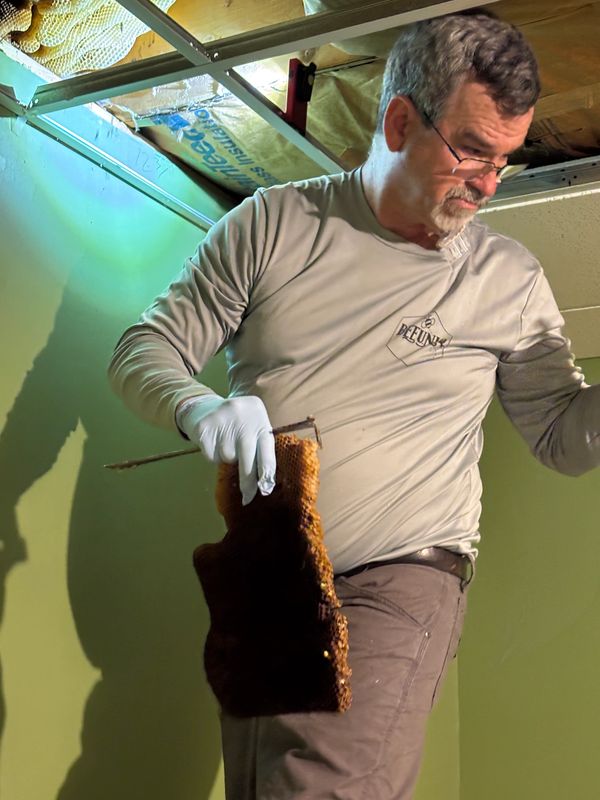
A "swarm" of honey bees is usually docile.
Bee Calm! Call a beekeeper! Time is important - so call a beekeeper ASAP. Look up your local club if you don't know a particular person to call.
Swarming happens when a colony divides, and a “swarm of bees” with their queen leaves in search of a new home. It's a very natural occurrence! The homeless swarm may (or may not) land temporarily anywhere.
Yes, anywhere! A few examples are a tree limb, bush, mailbox, patio, outdoor chair, eaves of your house, your house, office columns, or even a car. Perhaps the first spot chosen is a temporary spot while the scout bees continue searching for the new, more suited home. And, that could still bee somewhere less than perfect in man's eyes. For example your house - in the siding, rock wall, or your office entrance. Anywhere they measure to bee the right fit is a possibilty.
(Beekeepers keep honey bee colonies in hive boxes for management. The honey bees can live anywhere with only a few requirements.)
So to help prevent a swarm from moving into a house, business, porch, column, and so on... we encourage the use of swarm traps.
Once a swarm moves in a dwelling it is much harder to remove, and can bee costly.
Swarm boxes are baited with an inviting scent that is attractive to the honey bees. These swarm boxes are very helpful and often successful when placed in the ideal areas.
We add a product called Swarm Commander and
Lemongrass Essential Oil.
When you see a swarm of honey bees
PLEASE - Don't poison by using pesticides!
And
Don't call a pest control company to exterminate them either.
Avoid pesticides!
If you don't know a beekeeper contact your nearest beekeeping club and they will put you in touch with someone.
See our other swarm photos on the "Swarm Trap" tab in the menu.
Our Swarm Trap
a swarm - now a colony living in your house.
a swarm - now a colony living in your house.

Swarm trap - a wooden box made to specific measurements to hold frames. Paint to seal, and bait to hang for the purpose of attracting swarms.
Properly placed, these can lure the swarm, which prevents the homeless colony from moving into houses and buildings or other unwanted places,
More than one generation of swarm trap has been built as these continue to improve for the bees and the convenience of the beekeeper.
Check out the Swarm Traps page for additional pictures.